



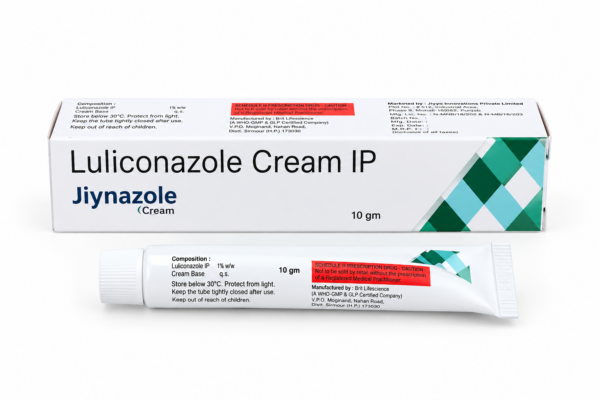
Jiynazole
- Composition
- Luliconazole 1% w/w
- Dosage form
- Cream
- Category
- Topical Antifungal
- Brand
- Jiyyo
Overview
Luliconazole 1% w/w Cream is an antifungal cream used for the treatment of ringworm, athlete’s foot and jock itch. It helps stop the growth of infection-causing fungi and relieve associated skin symptoms.
Read the full description
Luliconazole 1% w/w Cream is a topical antifungal medicine containing 10 mg of luliconazole per gram of cream. It is used to treat fungal skin infections such as ringworm of the body (tinea corporis), jock itch (tinea cruris) and athlete’s foot (tinea pedis).
It works by disrupting the fungal cell membrane, helping stop fungal growth and clear the infection. Use it according to the directions provided by your doctor or the product leaflet.
Uses & benefits
Luliconazole cream is used for certain fungal skin infections, including:
-
Ringworm (tinea corporis): A circular or ring-shaped fungal rash on the body.
-
Jock itch (tinea cruris): A fungal infection affecting the groin and nearby skin.
-
Athlete’s foot (tinea pedis): A fungal infection commonly affecting the feet and spaces between the toes.
It is not intended to treat every type of rash, eczema or bacterial skin infection
-
Helps treat susceptible fungal skin infections.
-
Stops fungal growth and helps clear the infection.
-
May reduce itching, redness and scaling associated with the fungal infection.
-
Applied directly to the affected skin.
-
Often requires once-daily application, with the treatment duration depending on the infection and prescribed directions.
How it works
Luliconazole inhibits an enzyme called lanosterol 14α-demethylase, which fungi need to produce ergosterol. Ergosterol is an essential component of the fungal cell membrane.
By disrupting ergosterol production, luliconazole damages the fungal cell membrane and helps kill susceptible fungi, allowing the infection to resolve.
Side effects
Possible side effects include:
-
Mild burning or stinging at the application site.
-
Itching or irritation.
-
Redness.
-
Skin dryness or local discomfort.
Stop using the cream and seek medical advice if irritation is severe or persistent. Get urgent medical help for signs of a serious allergic reaction, such as swelling of the face or throat or difficulty breathing.
How to use
-
Wash your hands and clean the affected skin.
-
Dry the area thoroughly.
-
Apply a thin layer over the affected skin and the immediate surrounding area, as directed.
-
Wash your hands after applying the cream, unless your hands are the area being treated.
-
Use it for the full prescribed duration, even if symptoms improve earlier.
Safety advice
-
Use only on the skin and avoid contact with the eyes, mouth and other mucous membranes.
-
Do not use if you are allergic to luliconazole or any ingredient in the cream.
-
Consult your doctor if you are pregnant, planning pregnancy or breastfeeding.
-
Ask a healthcare professional before using it on children, especially young children.
-
Do not combine it with steroid-containing creams unless specifically advised by a healthcare professional.
-
Keep the affected area clean and dry, and avoid sharing towels or clothing that contact the infected area.
-
Consult a doctor if the rash worsens, spreads or does not improve after the prescribed course. The diagnosis may need to be reassessed.
Storage
Keep in a cool, dry place away from direct sunlight. Keep the tube tightly closed when not in use.
FAQs
Q1. What is Luliconazole 1% cream used for?
It is used to treat certain fungal skin infections, including ringworm, jock itch and athlete’s foot.
Q2. How often should I apply it?
It is commonly applied once daily. Follow your doctor’s directions and the specific product leaflet.
Q3. How long does treatment take?
The reference treatment duration is generally one week for ringworm of the body or jock itch and two weeks for athlete’s foot between the toes. Your prescribed course may vary according to the diagnosis and product instructions.
Q4. Can I use it for any itchy rash?
No. Itching can have several causes, and luliconazole treats susceptible fungal infections rather than every type of rash.
Q5. Can I stop using it when the itching disappears?
Do not stop earlier than directed. Complete the prescribed course to reduce the chance of persistent or recurring infection.
Q6. Can I use it on my face or scalp?
Do not use it for these areas unless a healthcare professional specifically advises you to do so. The approved uses and application instructions depend on the product.
Q7. Is Luliconazole a steroid or an antibiotic?
No. Luliconazole is an antifungal medicine; it is neither a corticosteroid nor an antibiotic.
Q8. What is the pack size?
The specified pack size is 10 g.
- Jiyyo ‘s sole intention is to ensure that its consumers get information that is expert-reviewed, accurate and trustworthy. However, the information contained herein should not be used as a substitute for the advice of a qualified physician. The information provided here is for informational purposes only. This may not cover everything about particular health conditions, lab tests, medicines, all possible side effects, drug interactions, warnings, alerts, etc. Please consult your doctor through Jiyyo’s platform and discuss all your queries related to any disease or medicine. We intend to support, not replace, the doctor-patient relationship. For any discussion, clarification, or health-related queries, please consult Jiyyo’s qualified doctors.