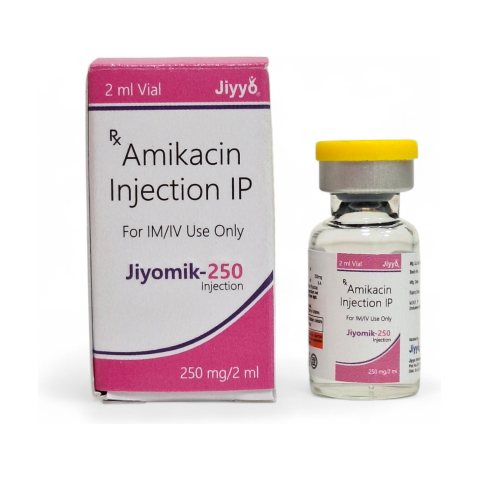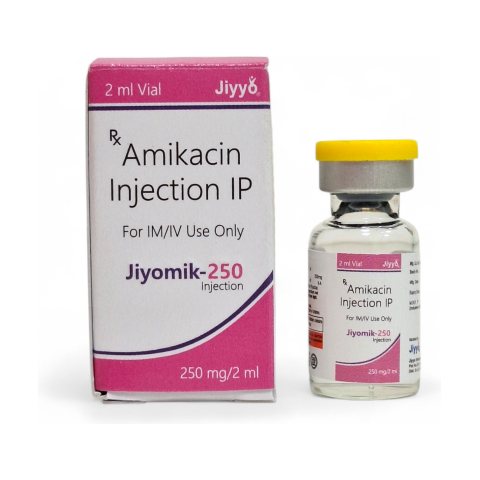
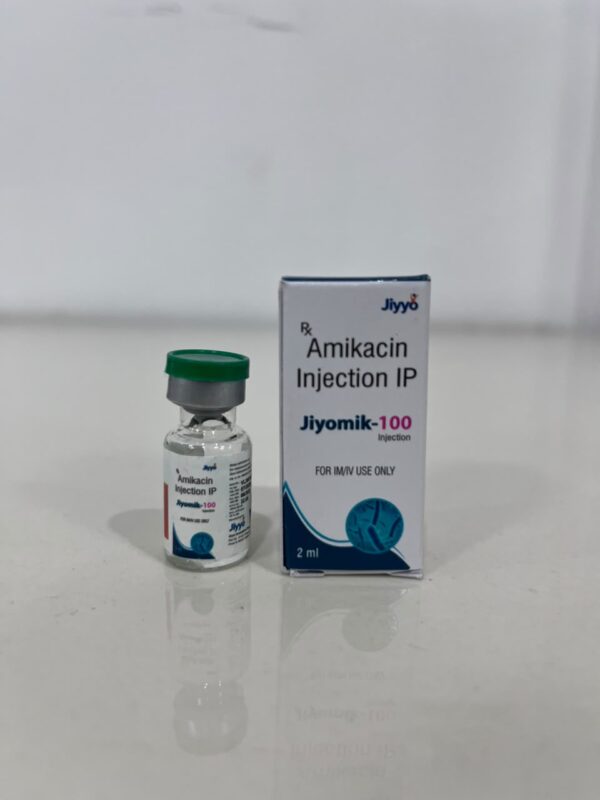
Jiyomik 100 inj
- Composition
- Amikacin 100 mg
- Dosage form
- Injection
- Category
- Aminoglycoside antibiotic, Infections
- Brand
- Jiyyo
Overview
Amikacin 100 mg Injection is a prescription antibiotic used under medical supervision to treat susceptible bacterial infections. It works by interfering with bacterial protein production and requires careful monitoring because it can affect kidney function and hearing.
Read the full description
Amikacin 100 mg is a prescription antibiotic injection containing amikacin, an aminoglycoside antibiotic used to treat certain serious bacterial infections. It may be prescribed for infections affecting the urinary tract, lungs, blood, bones, joints, and abdomen, depending on the bacteria involved and their sensitivity to the medicine. It is generally administered by a qualified healthcare professional.
Uses & benefits
Amikacin 100 mg Injection may be prescribed for certain susceptible bacterial infections, including:
-
Complicated urinary tract infections.
-
Serious respiratory tract infections, including some cases of pneumonia.
-
Bloodstream infections, including sepsis.
-
Bone and joint infections.
-
Certain abdominal infections.
-
Other serious infections caused by susceptible bacteria, when clinically appropriate.
-
Fights bacterial infections: Helps kill susceptible bacteria.
-
Treats serious infections: Can be useful for selected infections requiring injectable antibiotic treatment.
-
Targeted treatment: May be selected based on culture and antibiotic-sensitivity results.
-
Supports recovery: Effective treatment can help control the infection and prevent complications when the antibiotic is appropriate.
How it works
Amikacin belongs to the aminoglycoside group of antibiotics. It binds to the bacterial 30S ribosomal subunit, interfering with protein synthesis and causing the production of faulty proteins. This action kills susceptible bacteria and helps control the infection.
Side effects
Possible side effects of Amikacin 100 mg Injection include:
-
Pain, redness, or swelling at the injection site.
-
Nausea or vomiting.
-
Headache or dizziness.
-
Kidney damage or changes in urine output.
-
Hearing loss or ringing in the ears.
-
Balance problems or vertigo.
-
Rarely, severe muscle weakness or breathing difficulties.
Important: Hearing damage and kidney damage can be serious and may sometimes be irreversible. Seek prompt medical attention for ringing in the ears, reduced hearing, severe dizziness, or reduced urination.
How to use
-
Amikacin 100 mg Injection must be administered by a qualified healthcare professional.
-
It may be given into a muscle or through a vein, depending on the prescription.
-
The dose and treatment duration depend on body weight, infection severity, kidney function, and laboratory results.
-
Do not self-inject or change the dose without medical advice.
-
Complete the prescribed course unless your treating doctor advises otherwise.
-
Attend recommended kidney-function and hearing-monitoring tests during treatment.
Safety advice
-
Prescription only: Use only under medical supervision.
-
Kidney disease: Inform your doctor; dose adjustment and monitoring may be necessary.
-
Hearing problems: Tell your doctor about existing hearing loss, tinnitus, or balance disorders.
-
Pregnancy: Consult your doctor before use because amikacin may harm the developing baby’s hearing.
-
Breastfeeding: Seek medical advice before treatment.
-
Drug interactions: Inform your doctor about other antibiotics, strong diuretics such as furosemide, and medicines that may damage the kidneys or hearing.
-
Neuromuscular disorders: Inform your doctor if you have myasthenia gravis or another condition causing muscle weakness.
-
Allergy: Do not use if you have a known serious allergy to amikacin or related aminoglycoside antibiotics.
-
Monitoring: Kidney function, hearing, and sometimes blood amikacin levels may need monitoring, particularly during prolonged treatment or in higher-risk patients.
Storage
Keep away from direct sunlight, excessive heat, and moisture. Do not freeze unless the specific product instructions explicitly permit it
FAQs
Q1. What is Amikacin 100 mg Injection used for?
It is used to treat certain serious bacterial infections, including susceptible infections of the urinary tract, lungs, blood, bones, joints, and abdomen.
Q2. Can Amikacin 100 mg be self-administered?
No. It should be administered by a qualified healthcare professional according to the prescribed route and dose.
Q3. What are the serious side effects of Amikacin?
Serious effects include kidney damage, hearing loss, ringing in the ears, balance problems, and severe muscle weakness. Contact a healthcare professional immediately if these occur.
Q4. Does Amikacin affect kidney function?
Yes. It can damage the kidneys, particularly in people with existing kidney disease, dehydration, or exposure to other kidney-damaging medicines. Medical monitoring is important.
Q5. Can Amikacin cause hearing loss?
Yes. It may cause hearing damage, sometimes permanently. Report ringing in the ears, hearing changes, or balance difficulties promptly.
Q6. Is Amikacin safe during pregnancy?
It should be used during pregnancy only when a doctor determines that treatment is necessary and the potential benefits justify the risks.
Q7. How long does Amikacin treatment last?
The duration depends on the infection, clinical response, culture results, and kidney function. The treating doctor determines the appropriate course.
Q8. Can Amikacin treat viral infections?
No. Amikacin is an antibiotic that acts against susceptible bacteria; it does not treat viral illnesses such as colds or influenza.
Q9. Does Amikacin require laboratory monitoring?
Yes, in many cases. Kidney function should be monitored, and hearing assessments or blood drug-level monitoring may be required depending on the patient’s risk and treatment duration.
Q10. How should Amikacin 100 mg Injection be stored?
Store it according to the manufacturer’s label, protected from excessive heat and direct sunlight. Check the specific product’s temperature requirements before storage
Jiyyo ‘s sole intention is to ensure that its consumers get information that is expert-reviewed, accurate and trustworthy. However, the information contained herein should not be used as a substitute for the advice of a qualified physician. The information provided here is for informational purposes only. This may not cover everything about particular health conditions, lab tests, medicines, all possible side effects, drug interactions, warnings, alerts, etc. Please consult your doctor through Jiyyo’s platform and discuss all your queries related to any disease or medicine. We intend to support, not replace, the doctor-patient relationship. For any discussion, clarification, or health-related queries, please consult Jiyyo’s qualified doctors.
-
-
-
Infections
Tab Cefjiyo-LB
TabletCefixime 200mg + Lactic Acid Bacillus Dispersible 60 Millon SporesSale price ₹540.00MRP ₹1,490.00 -